Now
Year
2015
Medium
Mixed media on paper and acrylic
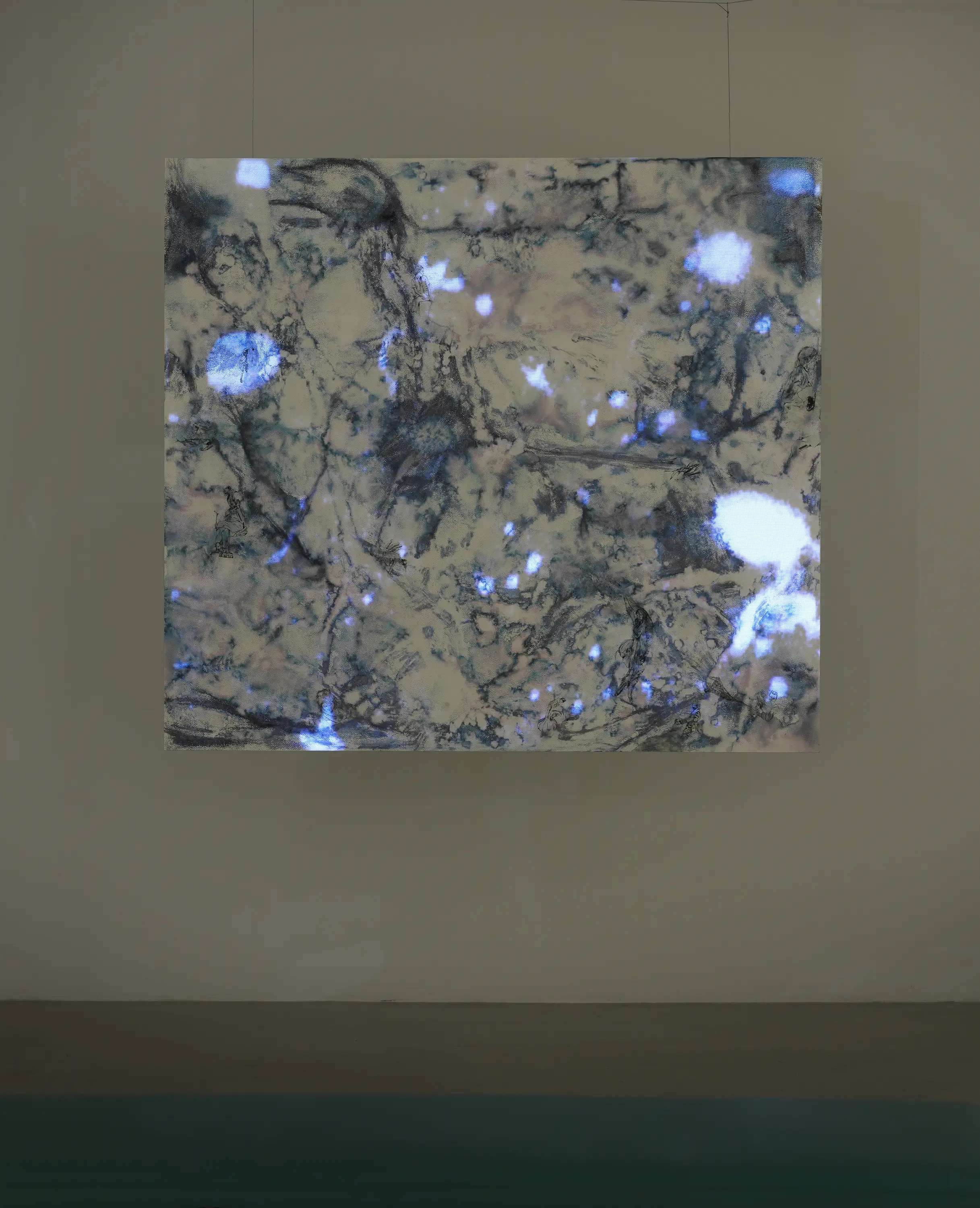
Featuring a 23-minute video loop of synaptic activity
Size
160 x 140 cm
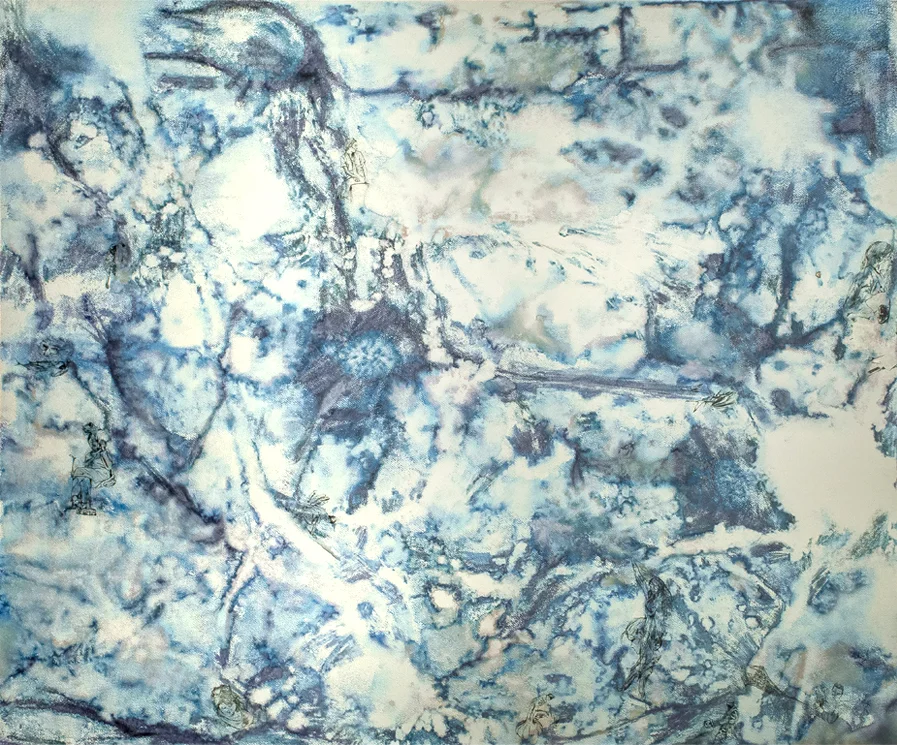
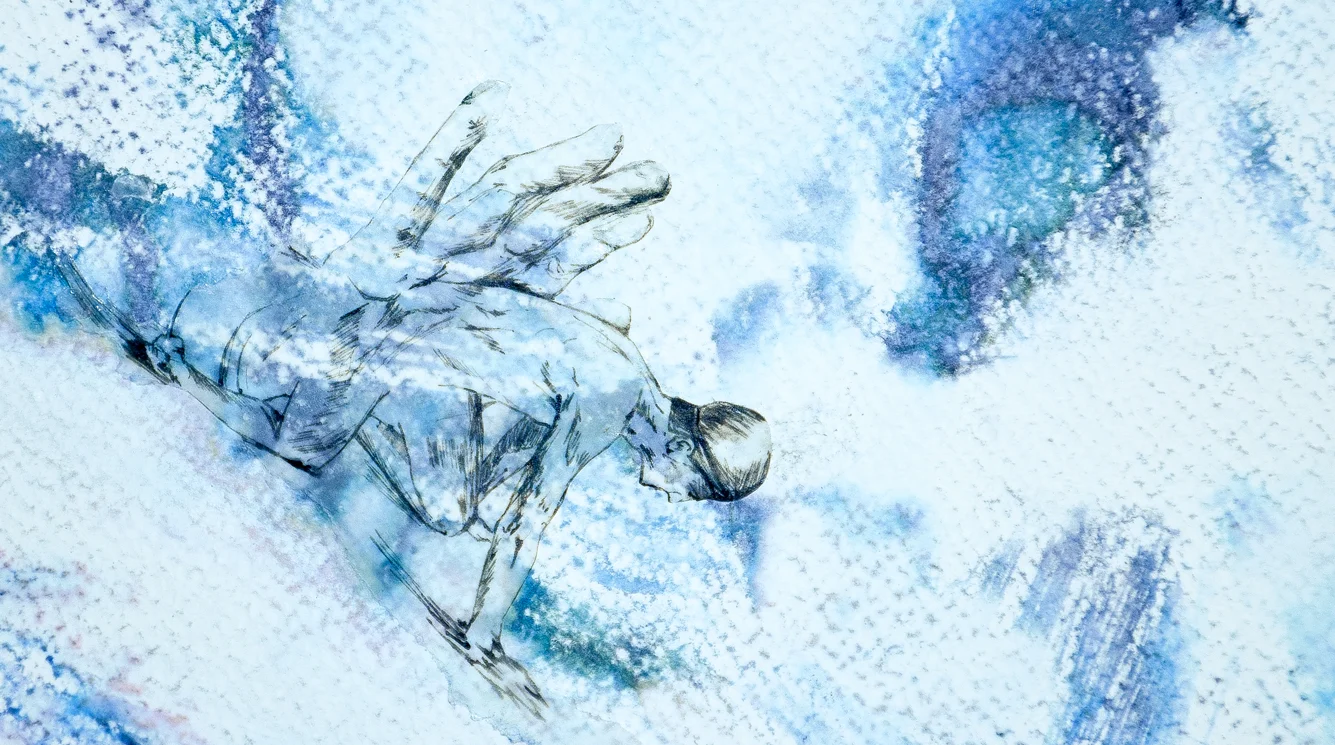
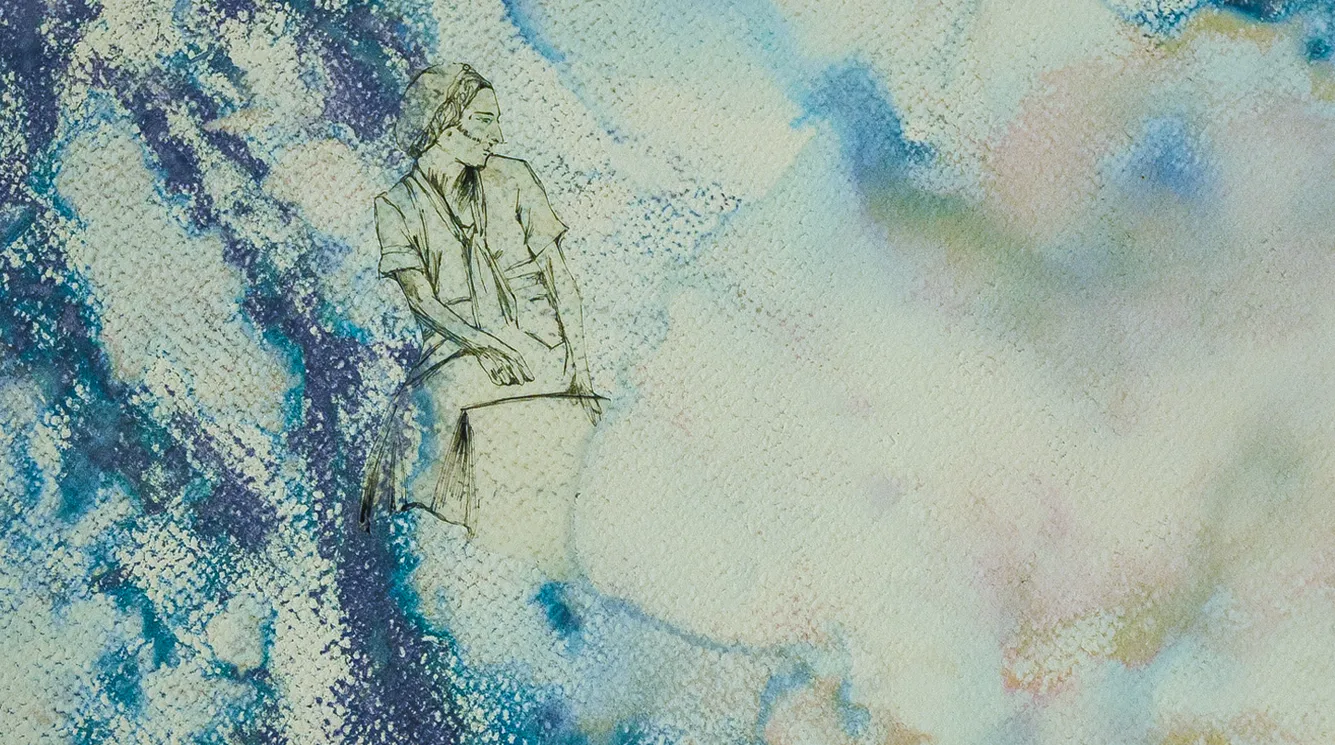
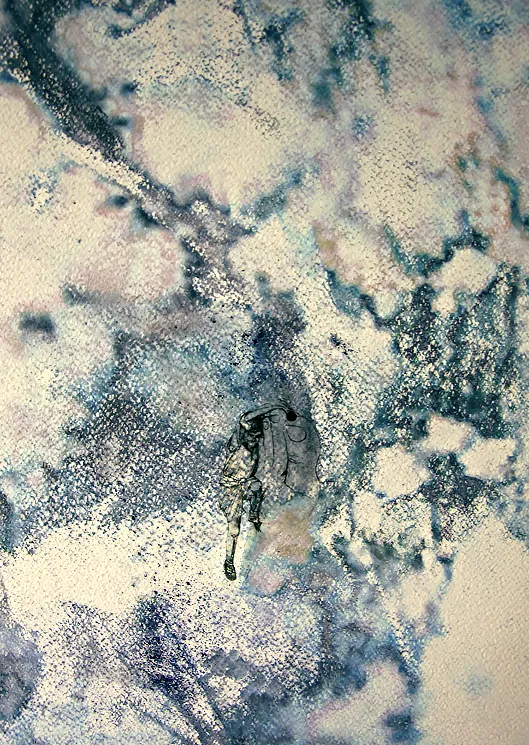
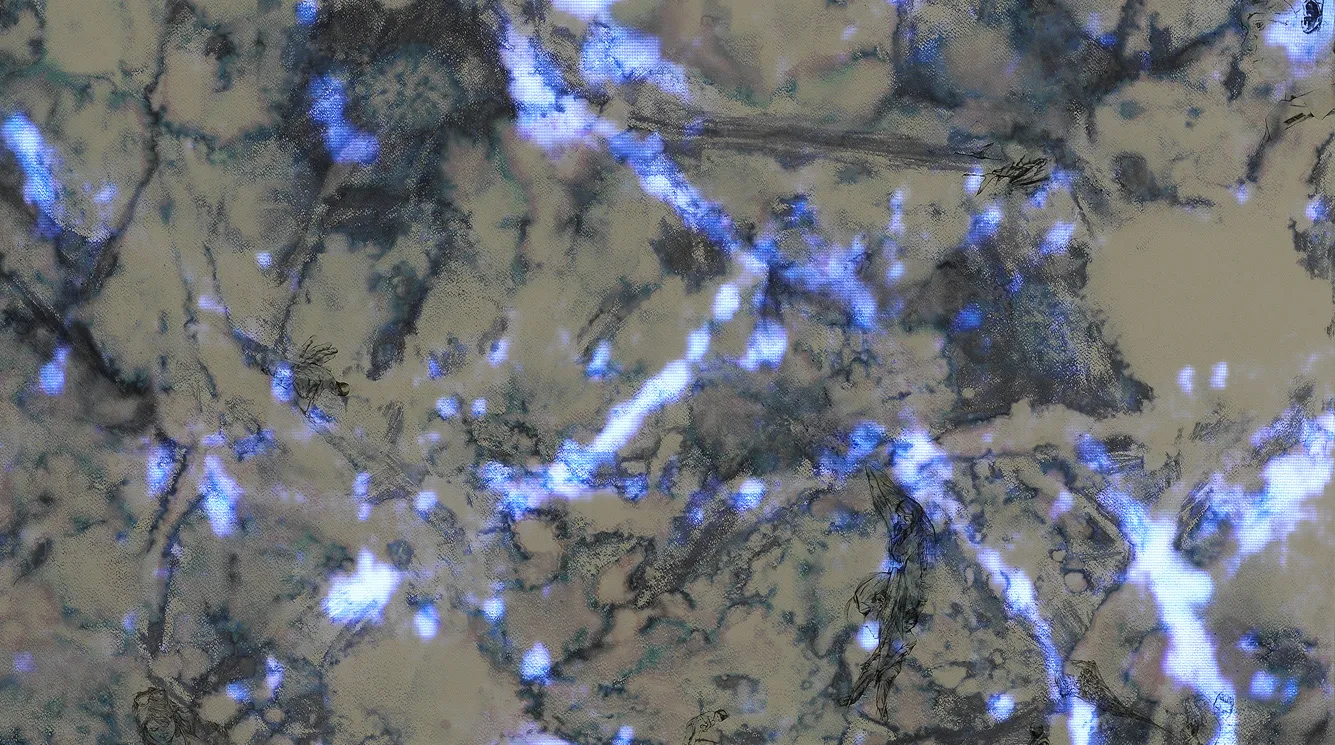
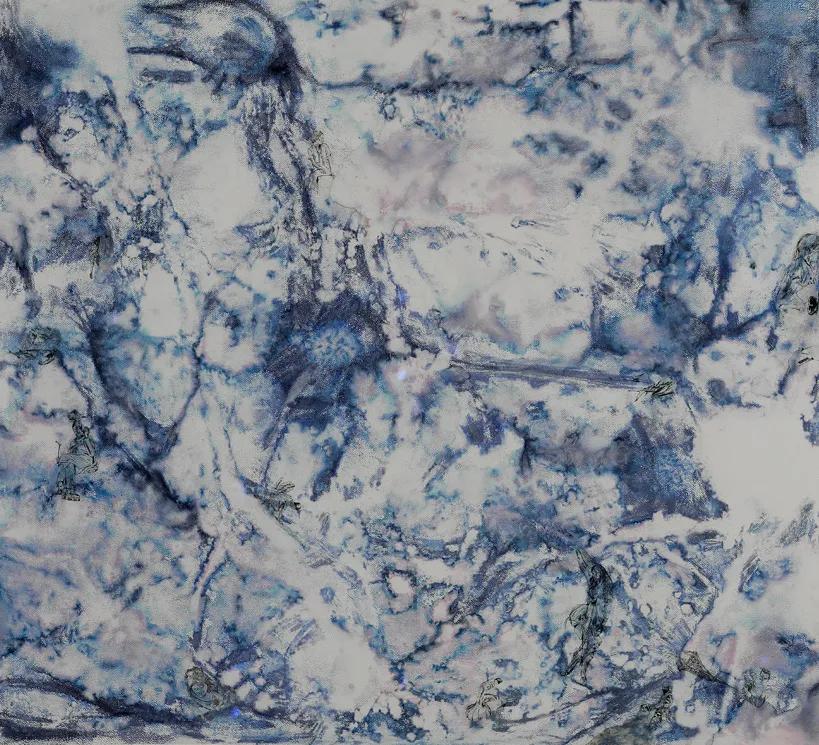

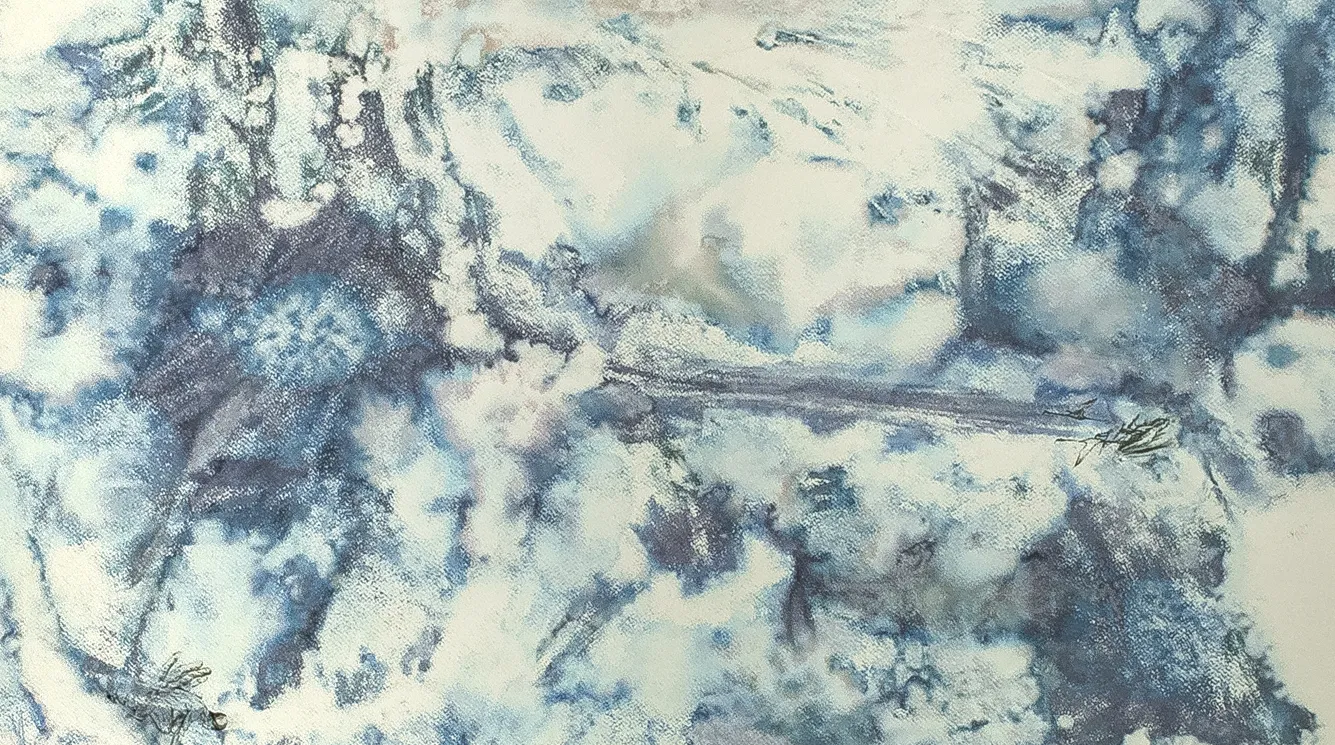
Saliency, La Memoria Cangiante, was conceived in dialogue with members of the scientific community at the Wu Tsai Institute and treats memory as a field where perception, identity, and matter intertwine. Through delicate drawings, it delves into memory and saliency: the perceptual mechanism through which certain elements emerge while others recede. The plasticity of the mind and the selective process of memory retrieval are central to the work as it developed through imaging contributions and cross-disciplinary dialogue.
The blue wave is inspired by a coronal section of the hippocampus, deep inside the brain. The intertwining areas of the dentate gyrus and Cornu Ammonis subfields support the formation and storage of long-term memory. This particular experimental sample illustrates a population of cells tagged using a transgenic fluorescent reporter of neural activity. The orange-labeled neurons were activated during the learning of an association between a visual cue and a salient, emotional stimulus. The identification of these briefly active neurons within the structural scaffolding of the hippocampus also reflects the competing ideas of transience and permanence that characterize the creation, retention, and decay of memories over time.
The work brings together these ideas that bridge art, psychology, and neuroscience, suggesting how living cells are in constant change. In Saliency, floating images seem to emerge from the very matter of the artwork; a pareidolia bridging thought and the world. Both art and memory arise from the mutable retrieval of life. Art is retrieval just as dream is retrieval.